The unique nature of the Civil War divided the United States, plunging the North and South into a war like no other, often pitting families against each other both off and on the battlefields. Despite the chaos and the brutal fighting, Civil War soldiers strongly maintained their faith and religion during the tumultuous 1861 through 1865. Through diaries and letters to loved ones, most soldiers expressed their continued faith in God during the most hopeless of times. Above all, the Union and Confederate soldiers retained a strong belief that God would bless them and keep them in the present life as well as the afterlife. Historian Dr. Steven E. Woodworth wrote, “The faith of Christian soldiers in the Civil War encompassed many facets of life, and they also believed that this present life was not the conclusion of their existence.”[1]
Faith and religion held a prominent place in the hearts and minds of Civil War soldiers and military leaders. Union and Confederates – no matter what side they fought or their beliefs towards secession, slavery, and abolition — God and faith remained strong both on and off the battlefield. Soldiers adapted church services, prayer meetings, and even revivals, as faith carried them through the difficult times and kept the spirit of their loved ones close despite the battles and miles between them.
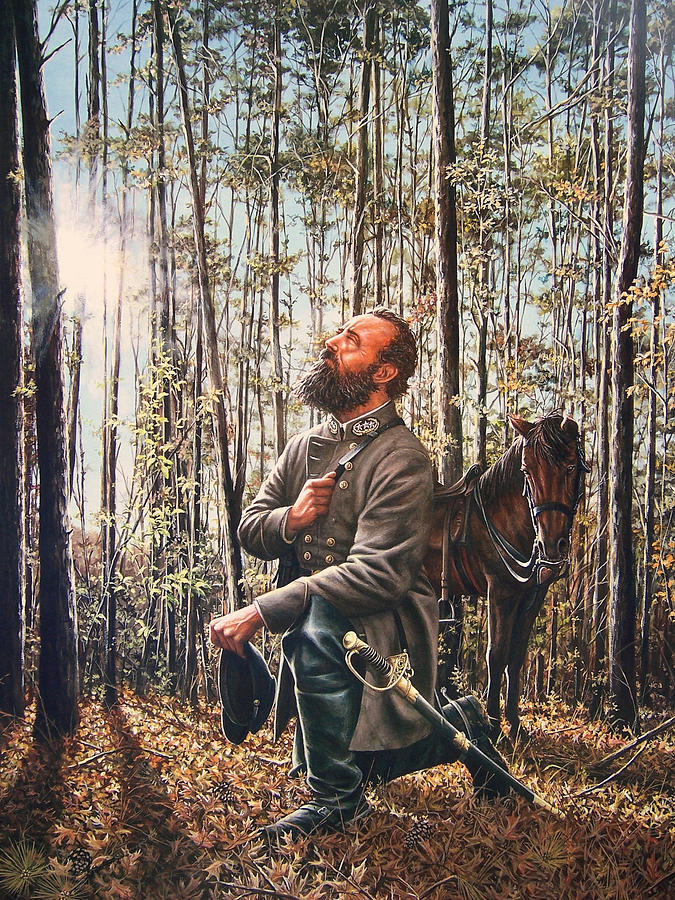
It is worth noting that before the Civil War, Northern and Southern churches and denominations began to splinter and ultimately fracture over slavery. As the soldiers prepared for the onset of the Civil War, they gathered together with shared interests and shared community ties. Religion bonded soldiers. Both sides believed that their cause was for God and blessed by scripture. Both sides believed strongly that the Bible legitimized and sanctioned their feelings toward slavery. Accordingly, the soldiers took that facet of their beliefs, entangled with their religion and faith, and headed into war.
Through faith, soldiers found a sense of community, and they pondered how they fit into this new group – the role of a soldier and acceptance from others. Therefore, religious fervor and a solid moral character instilled trust, courage, and honor among fellow soldiers. Fitting into a more religious community within the camps helped soldiers fight off the temptation of the sins of the camp, such as gambling and consumption. And, while they did not always have an opportunity to attend church services, they prayed and worshiped together.
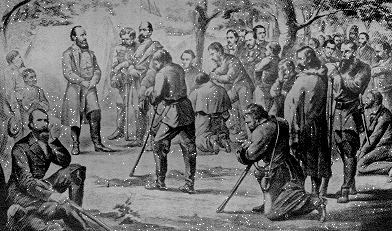
Soldiers clung to religion and faith, receiving a sense of compensation that helped alleviate anxiety, homesickness, loneliness, and the growing uncertainty the soldiers faced. Moreover, soldiers reverted to their faith in the darkest and most desperate moments, where battles were not on the battlefield but inside the prison camps. Faith offered the soldiers consolation during the bleakest moments. For so many soldiers, no matter what happened on or off the battlefield, it was God’s will, and everything they did held a moral purpose.
While it was unlikely to participate in formal Sunday services at a local church, many soldiers participated in services through chaplains sent to minister to the soldiers. And, in rare tranquil moments, soldiers read their bibles. Just as the soldiers were happy to receive letters, they were excited and happy to receive bibles for scripture was especially important, especially to their morale. Prayer meetings and revivals also gave soldiers a sense of hope and peace. Revivals during the Civil War transcended denominations and did not focus exclusively on one religion or denomination. In most situations, soldiers were simply happy to experience the revivals and meet with the chaplains at the camps for prayer and worship. Often, the chaplains arrived from their hometowns, acting as a bridge to their loved ones back home. Most of the time, the revivals were the closest some soldiers got to attending church because of their circumstances. Overall, the revivals strengthened faith for the more religious and pious soldiers; but they also resulted in powerful conversions for soldiers who either did not believe or who had set aside their faith at some point. In short, some soldiers found God, while others got closer to God.
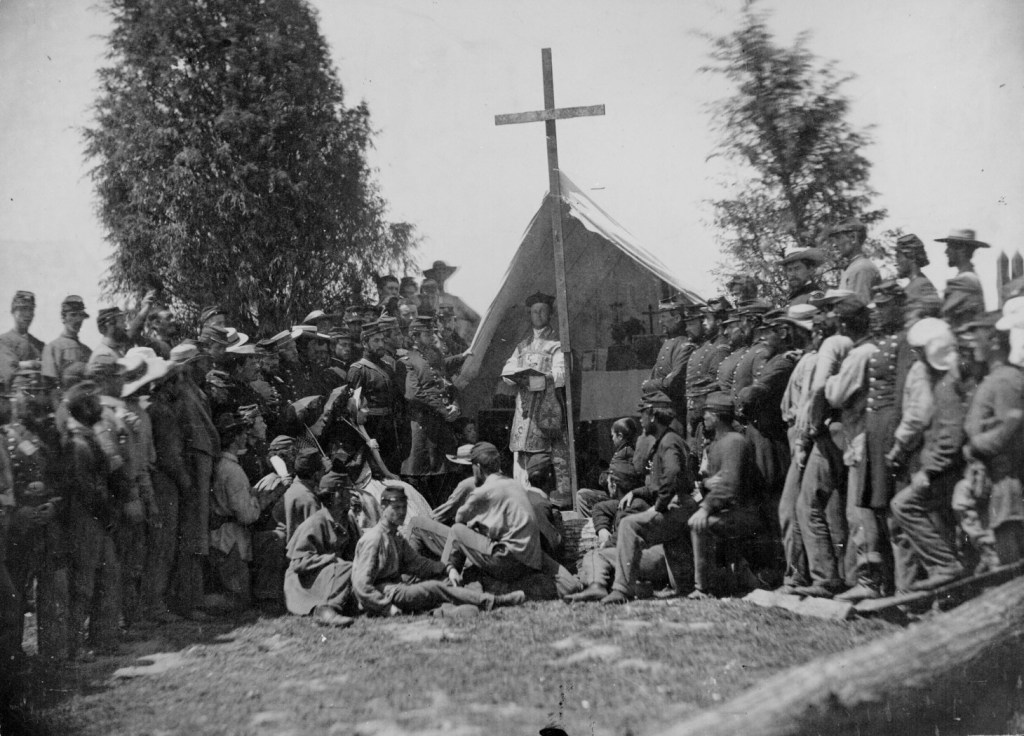
“The young men of America, in their millions, marched off to a war that for many would be the greatest test of their faith or of their religious training. For all of them, it would be a time to try the soul and turn the thoughts to serious themes.”[2] Elisha Hunt Rhodes wrote in his diary, “Today as I look back I cannot realize that I have seen the beginning and the end of the great Civil War. But such is the fact, and I devoutly thank God for it.”[3] Religion and faith certainly played a significant and daily role in the lives of so many Civil War soldiers. Religion and faith bonded soldiers into a sense of community, provided compensation when they needed it most while simultaneously consoling them throughout the horrors of the American Civil War. Both sides prayed, and both sides looked to God to carry them through the War.
Citations:
[1] Steven E. Woodworth. “While God is Marching On: The Religious World of Civil War Soldiers.” (Lawrence, KS: University Press of Kansas, 2001). 41.
[2] Steven E. Woodworth. “While God is Marching On: The Religious World of Civil War Soldiers.” (Lawrence, KS: University Press of Kansas, 2001). 26.
[3] Elisha Hunt Rhodes. “But God was Gracious to Me and Spared My Life.” —May 12, 29, and June 5, 1865.” The Routledge Sourcebook of Religion and the American Civil War, edited by Robert R. Mathisen. Routledge, 2014. http://ezproxy.liberty.edu/login?url=https://search.credoreference.com/content/entry/routsracw/but_god_was_gracious_to_me_and_spared_my_life_may_12_29_and_june_5_1865/0?institutionId=5072
 That History Lady