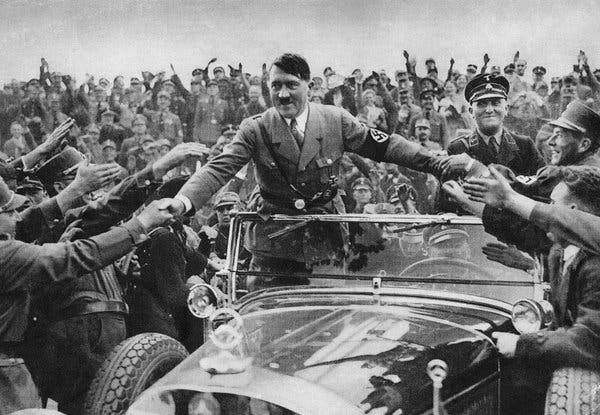
In the early stages of World War II, specifically 1939 through 1943, we see that Germany ravaged Europe through a combination of their unquenchable power as well as the weakness plaguing their enemies. Germany experienced tremendous military success spawning from Hitler’s incredibly keen ability to build and organize the masses and his charismatic personality inspiring Germans to fight for him for Germany’s honor. Hitler played on the notion that the “Traitors of November” ultimately stabbed Germany in the back and thus humiliated Germany in their defeat of World War I. Devastation, economic collapse, and severe sanctions from the Treaty of Versailles, most notably the slashing of Germany’s military, collectively swallowed Germany.
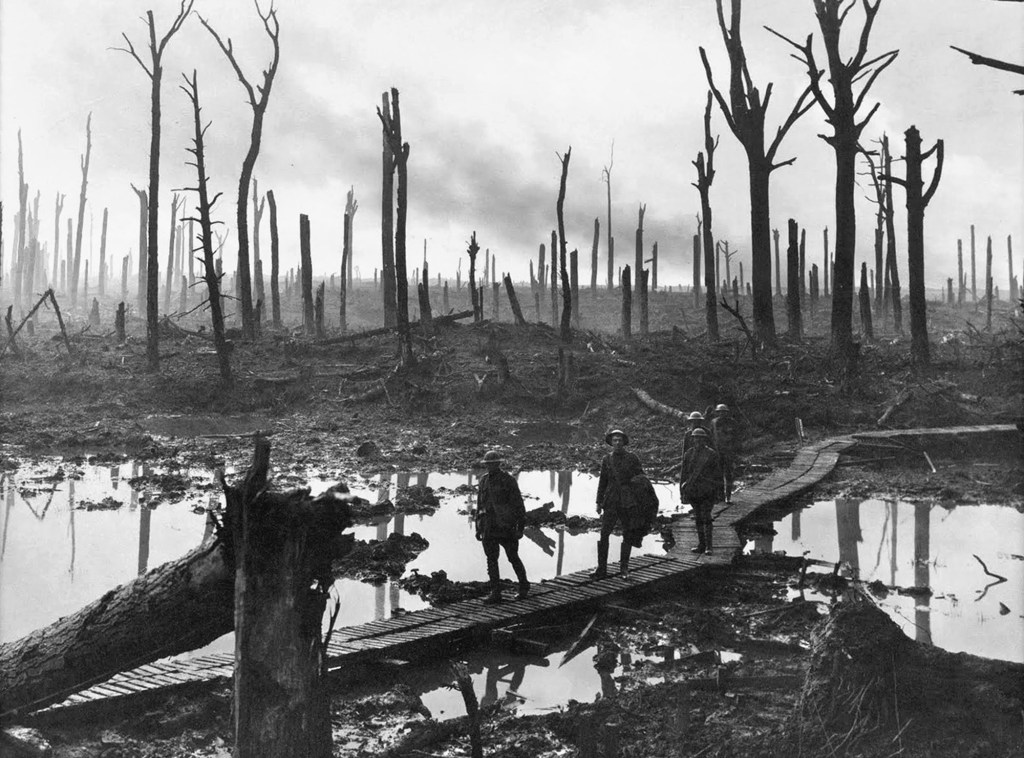
World War I may have been over, but for Germany, unrest and conflict brewed and festered. A piece of paper did not end the war; it merely inspired and essentially dared Hitler to rise. The post-World War I political, economic, social, and technological conditions allowed Hitler to begin organizing his military with little to no resistance. Distracted and weakened European countries faced their own monumental rebuilding efforts after World War I. While they may have given an occasional glance to Germany, there did not appear to be much fuss. The United States swore isolationism, so they left Germany to their actions and escalating aggression. Hitler knew how to manipulate people, so he had no trouble seeking favors and winning appeasement from his enemies. Hitler took full advantage of the apathy and distractions of his European neighbors as well as the budding isolationism expressed by the United States.
Hitler started building a small yet fiercely strong army; his rearmaments efforts flew in the face of the Treaty of Versailles, yet he continued undeterred by Europe. Steadily, smoothly, he continued increasing the size and strength of his military. Despite every maneuver he made against the Treaty of Versailles, Hitler emerged unscathed from any reprimands. By 1935, Hitler established the German air force (Luftwaffe) and expanded the German army, initiating conscription. He annexed Austria, snatched back the Rhineland, and occupied Czechoslovakia.
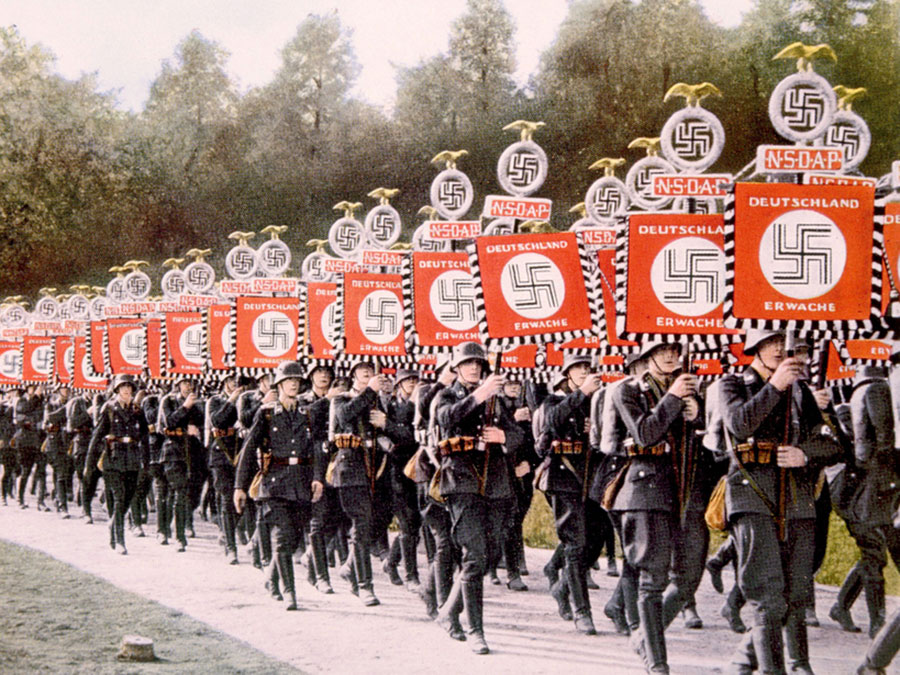
Hitler pushed forward and refused to let the Treaty of Versailles or the Munich Pact stop him from his goals. Now with an extraordinary military force in both size and technology, he was ready to unleash the ultimate fury upon Europe. On September 1, 1939, Hitler issued a proclamation to the Chancellor of the Reich and the German Army, condemning Poland for not cooperating with Hitler’s settlement efforts. “In order to put an end to this lunacy, I have no other choice than to meet force with force from now on. The German Army will fight the battle for the honour and the vital rights of reborn Germany with hard determination.”[1] Blitzkrieg ignited in Poland, and Hitler’s military dominated. While Great Britain and France declared war on Germany two days later, they did very little to defend Poland. Also, on September 3, 1939, Franklin D. Roosevelt announced the position of neutrality for the United States, reiterating isolationism, “Let no man or woman thoughtlessly or falsely talk of America sending its armies to European fields. At this moment, there is being prepared a proclamation of American neutrality. This would have been done even if there had been no neutrality statute on the books, for this proclamation is in accordance with international law and in accordance with American policy.”[2]
In Hitler’s mind, why stop there? Obviously, he was not going to stop there. He continued ravaging Europe and the Soviet Union. His successes lie in a two-fold strategy. Hitler was wildly successful at building an extraordinary military in combination with impressive advancements in military technology and the lightning warfare of Blitzkrieg. While all of that undoubtedly gave Hitler and Germany unparalleled success, the weakness of European enemies aided Hitler and Nazi Germany. Great Britain and France, in particular, struggled with their own problems from the devastation of World War I. Hitler’s extreme skill at manipulating people and his unchecked, mounting aggression only served to weaken his enemies further. Great Britain and France were content that the Munich Pact appeased Hitler, and all would be well. The Soviet Union received a rude awakening in June 1941 as they certainly were not expecting Hitler to come after them, especially after The Molotov-Ribbentrop Pact of 1939. Hitler possessed a deadly combination of a revitalized military and distracted enemies, and he used it to his extreme advantage. We would be wise to look back at the rise of Hitler and remember that history can and will repeat itself. Unchecked aggression and ignorance towards tyranny are incredibly volatile and dangerous things, as Hitler proved.
Citations:
[1] Hitler, A. (1939). Proclamation by Adolf Hitler, September 1, 1939. Retrieved November 25, 2020, from https://avalon.law.yale.edu/wwii/gp1.asp
[2] Roosevelt, F. D. (1939). On the European War. Retrieved November 25, 2020, from http://docs.fdrlibrary.marist.edu/090339.html
Bibliography:
Hitler, A. (1939). Proclamation by Adolf Hitler, September 1, 1939. Retrieved November 25, 2020, from https://avalon.law.yale.edu/wwii/gp1.asp
Roosevelt, F. D. (1939). On the European War. Retrieved November 25, 2020, from http://docs.fdrlibrary.marist.edu/090339.html
Schwabe, K. (2014). World War I and the Rise of Hitler. Diplomatic History, 38(4), 864-879.
Molotov-Ribbentrop Pact, 1939. (n.d.). Retrieved November 25, 2020, from https://sourcebooks.fordham.edu/mod/1939pact.asp
Munich Pact September 29, 1938. Retrieved November 25, 2020, from https://avalon.law.yale.edu/imt/munich1.asp
 That History Lady
You know, I have never subscribed to the belief that Stalin was caught off-guard by Hitler’s violation of the Molotov-Ribbentrop Pact. Stalin had people in the German Military command apparatus, he knew Hitler’s Plans. I personally believe that Stalin, himself, was waiting for the right time to break the Pact. I don’t think he was actually worried about Hitler violating, until the Blitz came across the border and the Nazis were covering so much ground so quickly. Between that, and the very real fear that the Soviet leader may have to face a two front war against the Japanese Empire to their East and the Nazis to their West. I have come to believe that Stalin decided to join the Allies to get their additional assistance, distract Hitler so the Soviets could “punish” the Nazis, and keep the Japanese busy in the Pacific and from attacking the Siberian border.
LikeLiked by 1 person