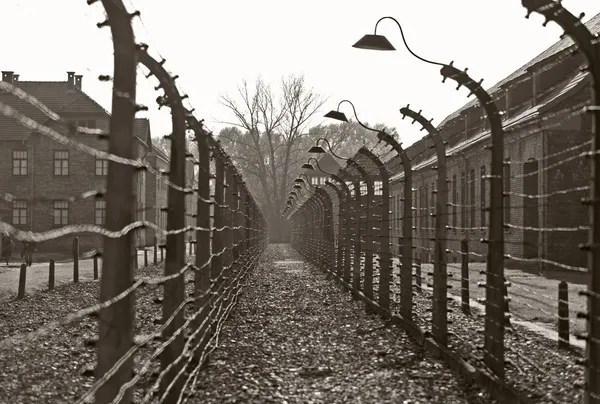
Holocaust denial seems unfathomable, but it is a reality that requires diligent awareness. Maintaining awareness is especially true in light of the fact those remaining survivors will soon be gone. Their experiences vitally fill the gaps in the present historical deposit of Holocaust knowledge. According to the United States Holocaust Memorial Museum, “Holocaust denial is any attempt to negate the established facts of the Nazi genocide of European Jews. Holocaust denial and distortion are forms of antisemitism, prejudice against or hatred of Jews. Holocaust denial and distortion generally claim that the Holocaust was invented or exaggerated by Jews as part of a plot to advance Jewish interests.”[1] Holocaust denial also diminishes and distorts the brutality of the systematic torture and murder of six million Jews and millions of other innocent victims of Hitler’s diabolical plans for a racially superior, pure Aryan world.
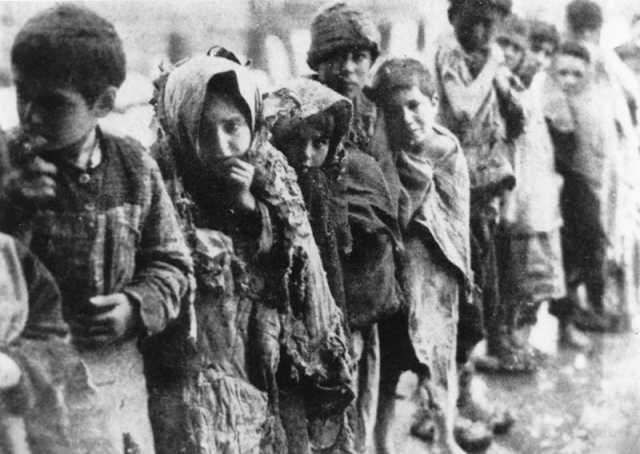
The denial, distortion, diminishment, and deflection of the Holocaust extend beyond the stereotypical “redneck” Neo-Nazis lurking in small, backwoods towns. Allegedly educated people corrupt historical facts, and they are finding voices in growing numbers and through organized groups via potent platforms in social media and the internet. Despite the mountains of evidence the overwhelming burden of proof, many people still insist the Holocaust either did not happen, or it was not as bad as history, as eyewitnesses, as victims say it was. Debating deniers publicly is useless, for they fail to waver in their fallacies. Education, preservation of the proof, and remembrance are powerful tools in combatting the fallacies enmeshed in Holocaust distortion and denial.
What exactly is Holocaust denial? Moreover, what is the difference between Holocaust diminishment, distortion, deflection, and denial?
Denial of the Holocaust is rooted in and exists as a form of anti-Semitism. “The manipulation of Holocaust memory is a symptom of a much larger problem in society, of which anti-Semitism is a major aspect.”[2]
Distortion of the Holocaust involves the manipulation of the facts (supported by evidence) of the Holocaust. It is a well-known fact that the Nazis built gas chambers for the purpose of murdering large numbers of Jews and other victims. Distortion of that fact entails citing that the gas chambers were not highly efficient killing facilities; rather, they were simply delousing stations as lice was a significant problem in the camps.
Diminishment involves minimizing aspects of the Holocaust. For example, admitting that while deaths occurred at the camps, the victims died of disease and starvation; they were merely casualties of war. Deflection, another limb to the monster of Holocaust denial, involves governments deflecting blame for their own historical role in the Holocaust. Rather than accept responsibility for their history, they deflect the blame, claiming to be victims of Nazi persecution during the war versus collaborators with the Nazis.
Holocaust deniers eviscerate the established and proven history regarding the systematic murder of the Jews and other victims and replace it with flimsy excuses that people often die in times of war. Diminishment, deflection, and distortion of the Holocaust ultimately fuel Holocaust denial.
How does Holocaust denial happen? According to historiographer Carl R. Trueman, “it creates doubts in the overall narrative by highlighting myriad inconsistencies or errors in the minor details of the evidence, as if the cumulative effect of such is sufficient to overthrow the edifice as a whole.”[3] Deniers carve out a small piece of evidence and twist it to suit their narrative, weaving a much more intricate web of deceit, fostering and nurturing that web into their arguments. “They focus on what is not known and ignore what is known, carefully selecting data that fit and ignoring data that do not fit their preconceived ideas.”[4] Holocaust denial started during World War II. From 1942 through Germany’s surrender, the Nazis and their collaborators attempted to decimate evidence of the killing centers and hide mass graves in Nazi-occupied territories. Denial continued mutating over the years throughout the world. One of the best-known and widely publicized accounts of Holocaust denial occurred in the mid-1990s when British author/ardent Holocaust denier David Irving sued historian Dr. Deborah Lipstadt and Penguin Books. Irving accused Dr. Lipstadt of libel in her book, Denying the Holocaust. Lipstadt won the battle and continues to educate on the topic of Holocaust denial, standing as one of the most knowledgeable and experienced experts in the study of Holocaust denial.
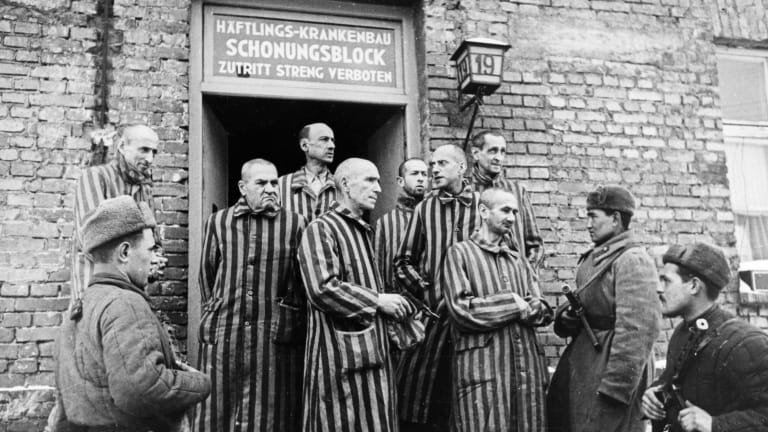
Among Irving’s beliefs is his claim that the Holocaust did not happen mainly because there is no proof that Hitler ordered the Holocaust. Considering Hitler was dealing with a war on two fronts as well as his war with the Jews and racially inferior people in Germany and across his growing empire, is the absence of an order containing his signature a valid argument? “If you read Mein Kampf and listen to Hitler’s speeches, exterminating the Jews was a major part of his agenda.”[5] Irving has also given empty and unfounded explanations that the gas chambers were not used to kill Jews at Auschwitz; the chambers were merely delousing stations. Even after proving in court that Irving’s claims were false, he continued to spread his lies openly. Irving repeatedly and giddily bragged over the years that trial was a win for him because he gained so many new followers and believers due to the publicity from the trial.
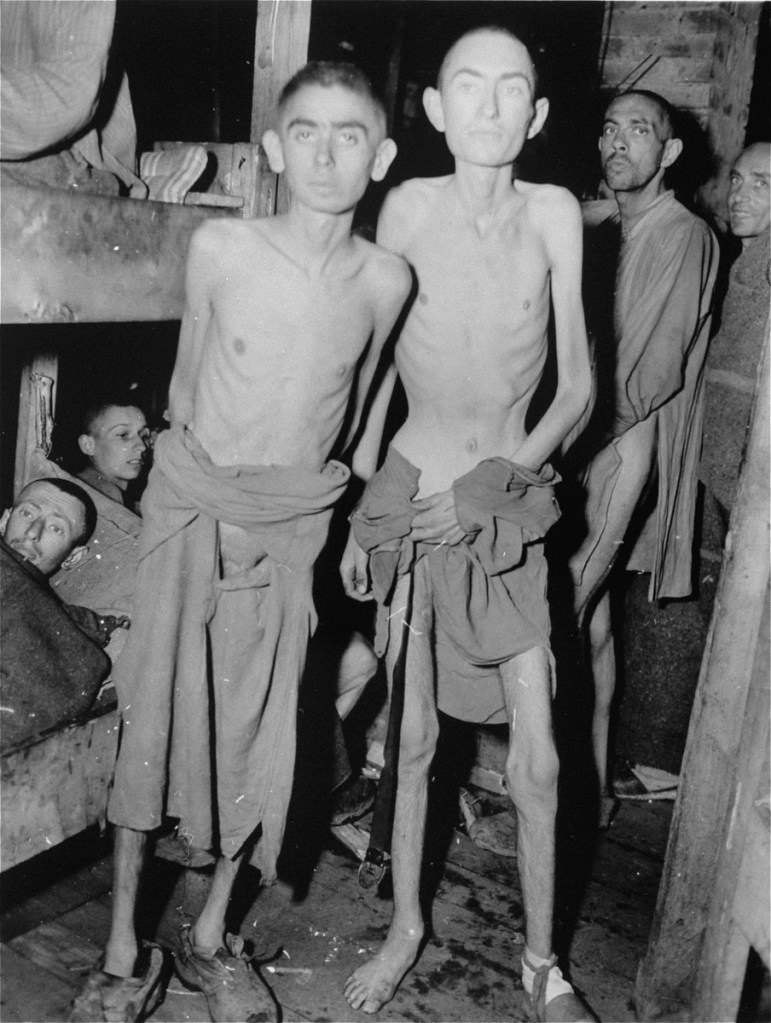
Arthur Butz, another notorious Holocaust denier, published “The Hoax of the Twentieth Century: The Case Against the Presumed Extermination of European Jewry” in 1976. Butz was an engineering professor at Northwestern at the time. According to the United States Holocaust Memorial Museum, “Butz was the first Holocaust denier to use the pretense of academic rigor to disguise his falsehoods.”[6] Butz then wrote in 1991, “The ‘Final Solution’ spoke of in the German documents was a program of evacuation, resettlement and deportation of Jews with the ultimate objection of expulsion from Europe. The legend claims that the motion was mainly for extermination purposes.”[7] Decades of hate and blatant lies still flourish despite testimonies from some of the perpetrators themselves who had admitted their role in the extermination of the Jews and other “undesirables” during the Holocaust. In 1943, SS Leader Heinrich Himmler gave a speech to SS group leaders in Posen wherein he stated, “We shall now discuss it absolutely openly among ourselves, nevertheless we shall never speak of it in public, I mean the evacuation of the Jews, the extermination of the Jewish race.”[8]
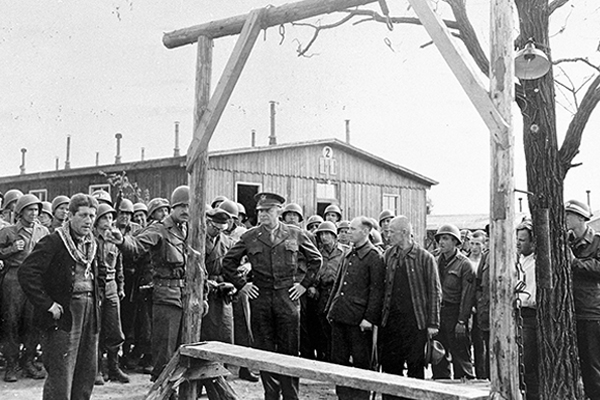
Deniers also promote the idea of conspiracy theories, going so far as to accuse the Jews themselves of creating fictional accounts, forging documents, and launching a massive worldwide campaign of lies. Since the end of World War II, Germany, in particular, has gone to great lengths to atone for the sins of their Nazi past. The deniers, however, argue that the Jews forced Germany to lie about the Holocaust and are being forced into accepting blame for something they did not do. Deniers will always find an explanation to defend their beliefs, no matter how shady or ridiculous it sounds. Their anti-Semitism, pro-Nazism, and unadulterated hatred run so profoundly that deniers refuse to accept the legitimacy of any proof invalidating their claims. Deniers also direct their primary focus towards the Jews, as though the millions of others – the Roma, the disabled, Christians, homosexuals, and other undesirables who perished at the hands of the Nazis serve as an inconvenience to their hate-infused farce. The propaganda does not really change from the days of Goebbels. The message is the same and is further exaggerated to fit the narrative of modern times, but it is no longer limited to posters and printed brochures. Deniers found a compelling medium through the internet and social media. Gone are the days when people crammed into theaters for propaganda films, replaced by YouTube videos and internet blogs, allowing varying degrees of anonymity to propagate the message.
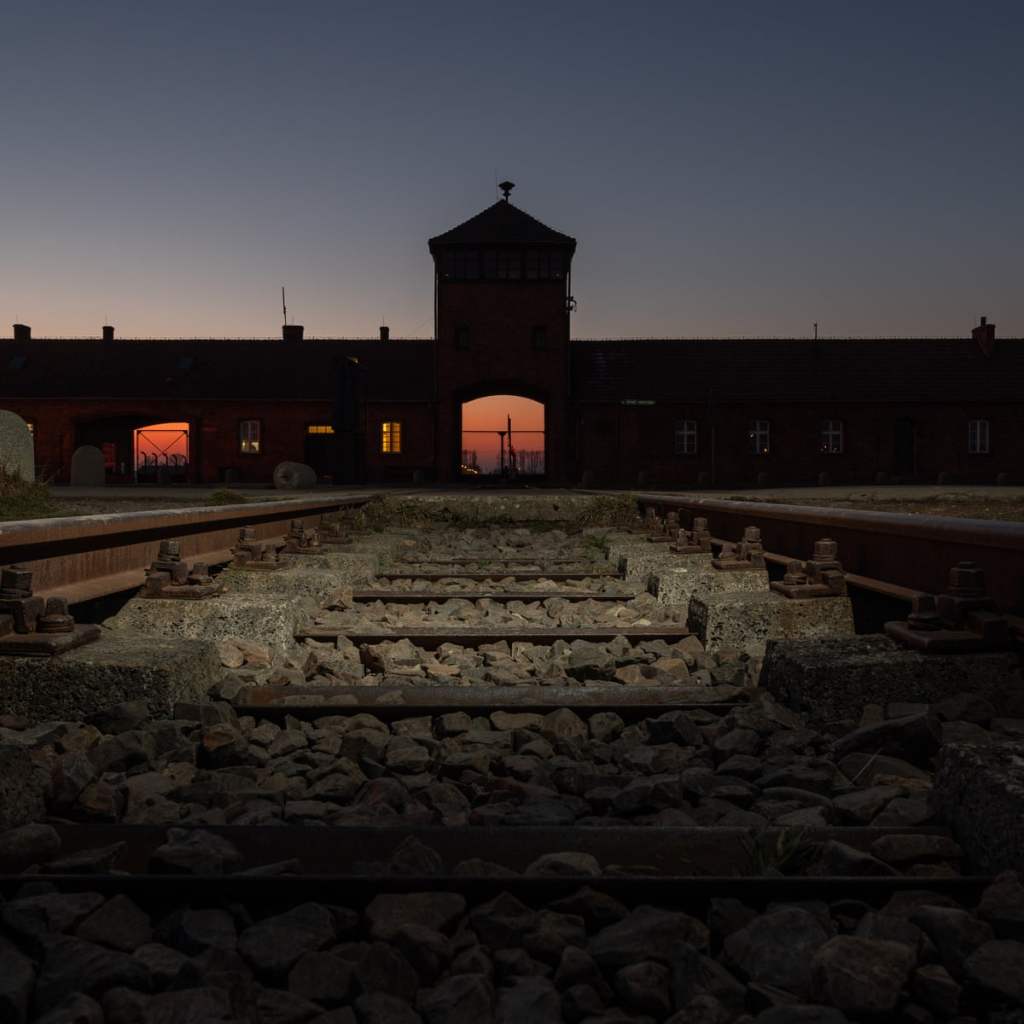
In a 2020 article, Dr. Deborah Lipstadt states, “The Holocaust has the dubious distinction of being the best-documented genocide in the world. For the deniers to be right, who would have to be wrong?”[9] Lipstadt proceeds to outline the scores of individuals and groups who would had to have engaged in such a massive conspiracy theory – from survivors to neighbors of survivors/victims, from people in the towns where the camps were constructed to “scores of historians who have studied and written about the Holocaust over the past sixty years”[10] to the perpetrators themselves. Another category of people should be added to Lipstadt’s list. The liberators would also have to directly involve themselves in this intricate conspiracy theory.
In April 1945, the Americans liberated Ohrduf Concentration Camp in Germany. General Dwight D. Eisenhower immediately sent a cable to General George C. Marshall and stated:
“The things I saw beggar description…The visual evidence and the verbal testimony of starvation, cruelty, and bestiality were so overpowering as to leave me a bit sick. In one room, where they were piled up twenty or thirty naked men, killed by starvation, George Patton would not even enter. He said he would get sick if he did so. I made the visit deliberately, in order to be in position to give first-hand evidence of these things if ever, in the near future, there develops a tendency to charge these allegations merely to ‘propaganda.’”[11]
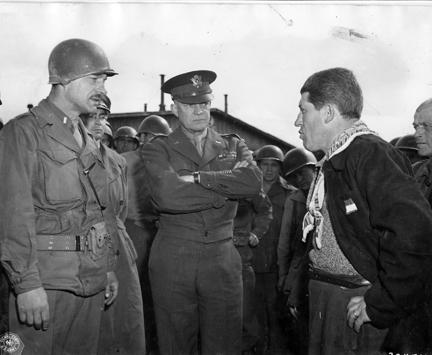
As one of the first eyewitnesses to the horrors of the Nazis, Eisenhower clearly understood the imperative nature of documenting the findings at the camp to ward off future deniers who might cry “lies” or “propaganda by the Jews.” Or perhaps, the deniers would just shrug and claim Eisenhower’s findings were mere products of war. Holocaust deniers take classical anti-Semitism, sprinkle in pro-Nazism and adoration for Hitler, and elevate it to a gargantuan new, modern level. Is it even possible to estimate how many millions of people would have to be involved in creating such an elaborate hoax?
History is often ugly and contains brutal chapters but erasing it or minimalizing it fails to educate people to learn from the past, inviting the brutality to repeat itself once again. After all, the Holocaust happened in a civilized society, in civilized times. “The deniers’ window of opportunity will be enhanced in years to come. The public, particularly the uneducated public, will be increasingly susceptible to Holocaust denials as survivors die.”[12] And while deniers like David Irving and Arthur Butz grow old and pass on, their virulent, rabid followers will continue to diminish, distort, and deny the Holocaust as they are fueled by deep-seated hatred, stuck in a twisted mindset, disrespecting the brutality experienced by the victims while reveling in anti-Semitism and pro-Nazism. They and others like them classify themselves as revisionists, seeking to right the wrongs of history. They take full advantage of technologies to pontificate their hate-driven message, spawning their seeds of hate, and ultimately growing their numbers. They will seek to find inventive ways to lie, falsify, and manipulate the heinous tragedy of the Holocaust to varying degrees of untruths and distortion.
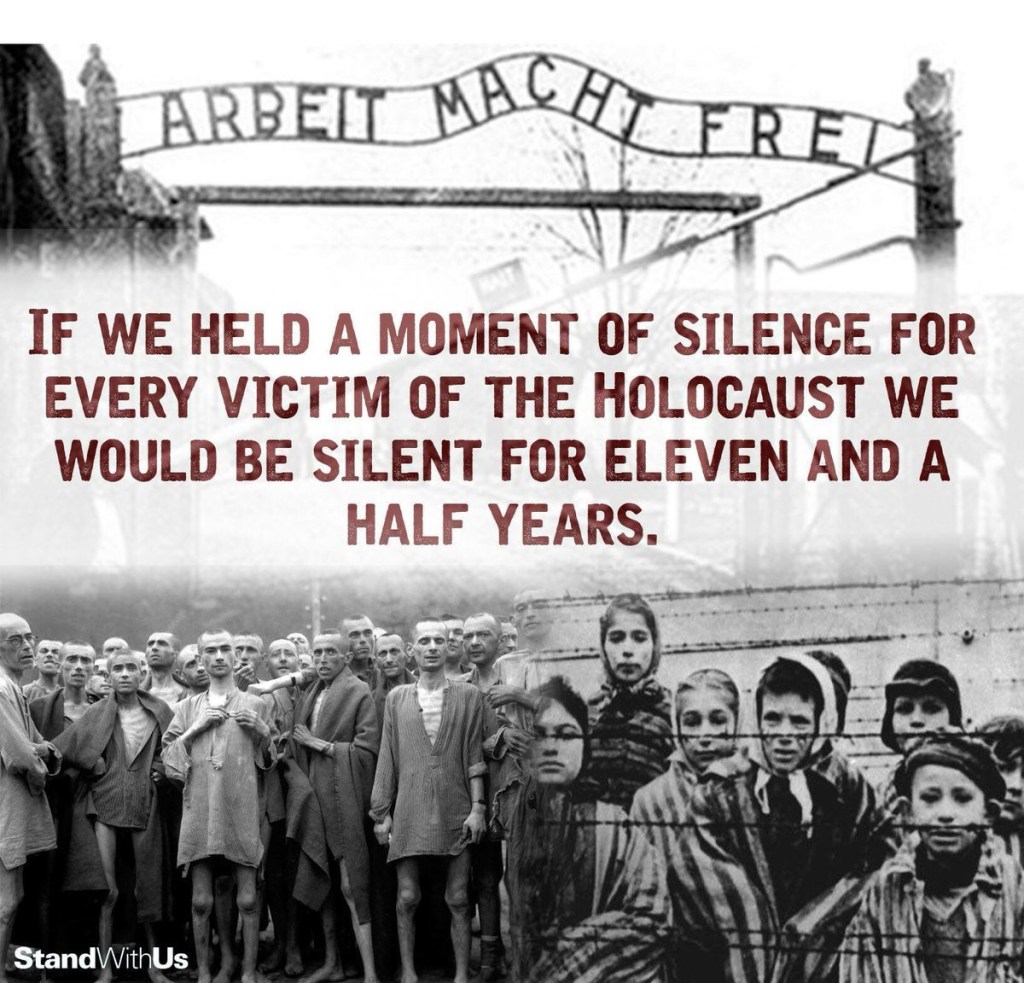
It is not about debating the deniers through point-by-point rebuttals for such debate only excites deniers, giving a warped sense of merit to their depraved claims. Rather, education should be employed to weaken deniers’ claims. History needs to be learned and not diminished, deflected or distorted. Once those things happen, history denial festers, and history is ultimately forgotten and lost. “These things never happen in isolation. They may start with the Jews but rarely end there. Holocaust denial is not the danger. It is what follows in its wake that should scare us.”[13] Deniers will continue to groom unsuspecting and uneducated followers, but by being more proactive in teaching and remembrance efforts, the battle tilts in favor of reason, logic, facts, and evidence versus pseudohistory. Our job as historians is to be ever vigilant in teaching the world that the Holocaust was very real. The Holocaust happened during “civilized” times in history.
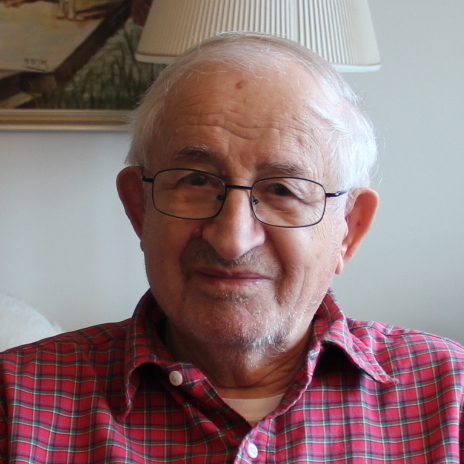
“We rely on you younger people to keep our voices alive, for we are living on borrowed time.”[14]
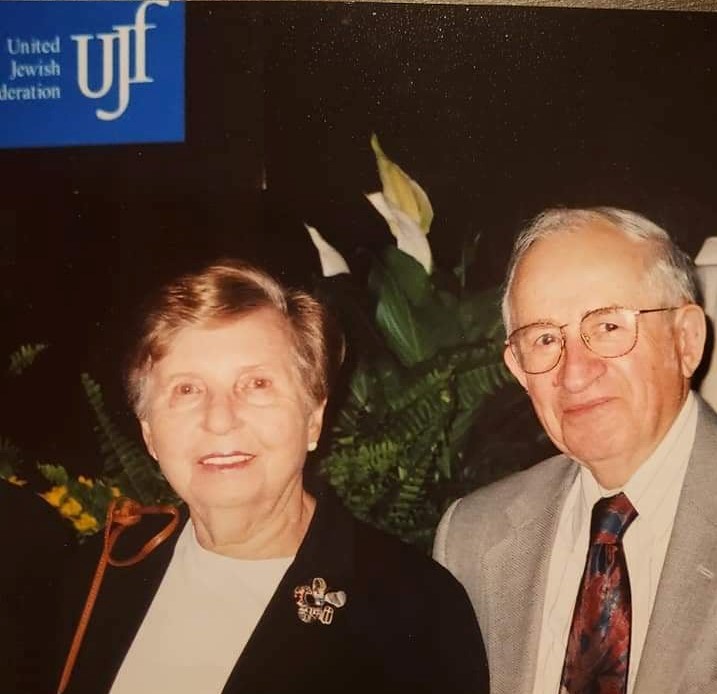
Hatred is a potent force that can drive aggression in horrific ways, and, if left unchecked, hatred can lead to violent and murderous circumstances. The Jews certainly know this. “However, the Jewish community weren’t the only ones who suffered. Millions of other ‘undesirables’ died at the hands of the Nazis – a graphic reminder that when one race or group of people is targeted, everyone is vulnerable.”[15] The Holocaust was deliberate and systematic, carefully skilled and executed by the Nazis. Insurmountable evidence, thousands of hours of testimony by survivors, and eyewitness accounts by the liberators exist. “To deny or undermine the historicity of the Holocaust at a time when anti-Semitism is once again on the rise worldwide is to fan the flames of racism and hate; to tolerate it is to invite a repeat of history.”[16] The world must never forget.

Bibliography
Behrens, Paul, Nicholas Terry, and Olaf Jensen. Holocaust and Genocide Denial: A Contextual Perspective. London, England: Routledge, 2018.
Evans, Richard J. Lying about Hitler: History, Holocaust, and the David Irving Trial. New York, NY: Basic Books, 2002.
Morcan, James, and Lance Morcan. Debunking Holocaust Denial Theories: Two Non-Jews Affirm the Historicity of the Nazi Genocide. Papamoa, Bay of Plenty, NZ: Sterling Gate Books, 2016.
Trueman, Carl R. Histories and Fallacies: Problems Faced in the Writing of History. Wheaton, IL: Crossway, 2010.
Bischoping, Katherine. “Responses to Holocaust Denial: A Case Study at the University of Michigan.” Contemporary Jewry 18, no. 1 (1997): 44-59.
Butz, Arthur R. “A Short Introduction to the Study of Holocaust Revisionism.” The Public’s Library and Digital Archive, January 6, 1997. http://www.ibiblio.org/team/history/controversy/abutz/intro.html.
Butz, Arthur R. “The International ‘Holocaust’ Controversy.” Institute for Historical Research. The Journal of Historical Review, v1, no.1 (1980): Accessed February 8, 2021. http://www.ihr.org/jhr/v01/v01p–5_Butz.html.
Gerstenfeld, Manfred. “The Multiple Distortions of Holocaust Memory.” Jewish Political Studies Review 19, no. 3/4 (2007): 35-55.
Lang, Berel. “Six Questions On (or about) Holocaust Denial.” History and Theory 49, no. 2 (2010): 157-68.
Petropoulos, Jonathan. “Confronting the “Holocaust as Hoax” Phenomenon as Teachers.” The History Teacher 28, no. 4 (1995): 523-39.
Rosenfeld, Alvin H. “The Assault on Holocaust Memory.” Kultur Poetik 2, no. 1 (2002): 82-101.
Whine, Michael. “Expanding Holocaust Denial and Legislation Against It.” Jewish Political Studies Review 20, no. 1/2 (2008): 57-77.
Secondary Sources: Websites
Note: Websites served as sources for this project to research deniers’ words. Deniers love using the internet as their platform for spreading their hateful speech and perpetuating their lies. One example, CODOH claims, on their website, to be the “largest, liveliest revisionist moderated online discussion of the Holocaust. I also included a website that claimed to be David Irving’s website.
The Dwight D. Eisenhower Presidential Library contains a multitude of primary sources related to the liberation of the camps and what was discovered (photographs) and letters, memorandums, and official government/military correspondences. Two other websites, the United States Holocaust Memorial Museum and Emory University’s Holocaust Denial on Trial were used to research a timeline of the evolution of Holocaust denial and to access the court transcripts for the trial of Irving v. Penguin UK and Deborah Lipstadt.
Dwight D. Eisenhower Presidential Library Museum & Boyhood Home.
“Fake Einsatzgruppen Shooting Photos – Only Liars Need Fakes.” CODOH. CODOH. https://forum.codoh.com/viewtopic.php?t=441.
Holocaust Denial on Trial. “Trial Transcripts: Irving v. Penguin UK and Deborah Lipstadt.” Holocaust Denial on Trial. Emory University Holocaust Denial on Trial https://www.hdot.org/wp-content/themes/osmosis/images/empty/thumbnail.jpg, September 22, 2016. https://www.hdot.org/trial-materials/trial-transcripts/.
Real History!Welcome to David Irving’s Website. Focal Point Publications, 2019. http://www.fpp.co.uk/.
United States Holocaust Memorial Museum. “Holocaust Denial: Key Dates.” United States Holocaust Memorial Museum. United States Holocaust Memorial Museum, September 5, 2020. https://encyclopedia.ushmm.org/content/en/article/holocaust-denial-key-dates?series=26.
Primary Sources:
Gottesman, Sam. Personal interviews and conversations between Mr. Gottesman and MaryBeth Allison between February 2004 and August 2005.
Himmler, Heinrich. “Himmler’s Speech at Posen October 4, 1943.” The History Place – Holocaust Timeline: Himmler’s Speech at Posen. https://www.historyplace.com/worldwar2/holocaust/h-posen.htm.
Patton, George S. Dwight D. Eisenhower’s Pre-Presidential Papers, Principal File, Box 91 Patton George S. Jr. (1). Abilene, KS. https://www.eisenhowerlibrary.gov/research/online-documents/world-war-ii-holocaust-extermination-european-jews
Dwight D. Eisenhower Presidential Library Museum & Boyhood Home.
[1] United States Holocaust Memorial Museum. “Holocaust Denial and Distortion.” https://www.ushmm.org/antisemitism/holocaust-denial-and-distortion
[2] Manfred Gerstenfeld. “The Multiple Distortions of Holocaust Memory.” Jewish Political Studies Review 19, no. 3/4 (2007): 52.
[3] Carl R. Trueman. Histories and Fallacies: Problems Faced in the Writing of History. (Wheaton, IL: Crossway, 2010), 39.
[4] Shermer, Michael, and Alex Grobman. Denying History: Who Says the Holocaust Never Happened and Why Do They Say It? (Berkeley, CA: University of California Press, 2002), 103.
[5] James Morcan and Lance Morcan. Debunking Holocaust Denial Theories: Two Non-Jews Affirm the Historicity of the Nazi Genocide. (Papamoa, Bay of Plenty, NZ: Sterling Gate Books, 2016), 98.
[6] United States Holocaust Memorial Museum. “Holocaust Denial: Key Dates.” https://encyclopedia.ushmm.org/content/en/article/holocaust-denial-key-dates
[7] Arthur R. Butz. “A Short Introduction to the Study of Holocaust Revisionism.” The Public’s Library and Digital Archive, January 6, 1997. http://www.ibiblio.org/team/history/controversy/abutz/intro.html.
[8] Heinrich Himmler. “Himmler’s Speech at Posen. October 4, 1943.” The History Place – Holocaust Timeline: Himmler’s Speech at Posen.
[9] Deborah Lipstadt. “Holocaust Denial: An Antisemitic Fantasy.” Modern Judaism 40, no. 1 (2020): 71.
[10] Ibid, 71.
[11] Eisenhower to General George C. Marshall, April 15, 1945, (Dwight D. Eisenhower’s Pre-Presidential Papers, Principal File, Box 80, Marshall George C. (6).
[12] Deborah Lipstadt. Denying the Holocaust: The Growing Assault on Truth and Memory. (New York, NY: Penguin Books, 1994), xiii.
[13] Deborah Lipstadt. “Holocaust Denial: An Antisemitic Fantasy.” Modern Judaism 40, no. 1 (2020): 83.
[14] MaryBeth Allison, interview with Sam Gottesman, “My Interview with Sam Gottesman,” February 2004.
[15] James Morcan and Lance Morcan. Debunking Holocaust Denial Theories: Two Non-Jews Affirm the Historicity of the Nazi Genocide. (Papamoa, Bay of Plenty, NZ: Sterling Gate Books, 2016), 21.
 That History Lady