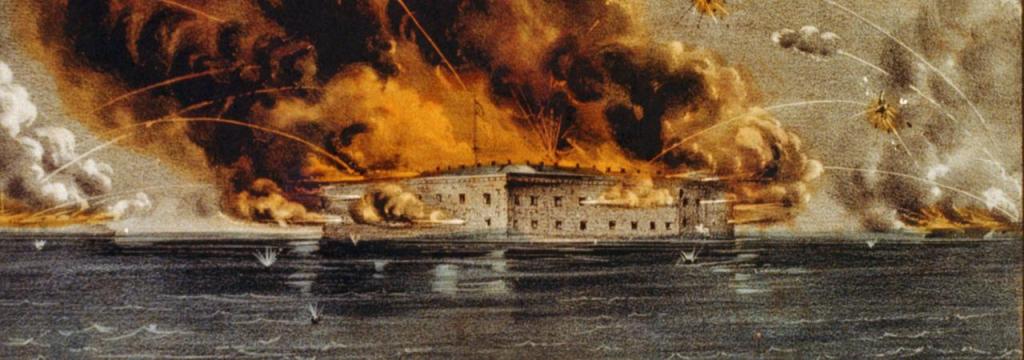
Today, we mark the anniversary of the start of the American Civil War. Today’s post considers how the motivations of Civil War soldiers, Union, and Confederate, varied from one individual to another, and the motivations often changed as the war continued. For instance, in his memoirs, Confederate Soldier Joshua K. Callaway initially appears eager to fight for the Confederates. Callaway was searching for glory and, as he describes, he “could not help feeling a spark of ambition, a desire to make my name as immortal in future history.”[1] Callaway possesses enthusiasm and sees his service as a Confederate soldier as an opportunity for excitement beyond his mundane life as a teacher. Callaway’s early letters reveal that he is anxious to see actual battle and yet feels somewhat discontent with the monotony of army life. In those early letters, Callaway expressed that the significant amount of downtime he incurred made him long for home and for his wife and children. Still, he moves forward with the hope of “seeing the elephant” and experiencing battle. Even when Callaway eventually saw the elephant, the amount of idle time, the dreadful conditions, and his increasing homesickness (as well as physical sickness) started to extinguish that flame of excitement. His letters reveal his escalating internal struggles as he begins questioning if peace is even possible while expressing his need to be closer to God. Callaway’s motivation changed as his enthusiasm dwindled as the horrors of war emerged.
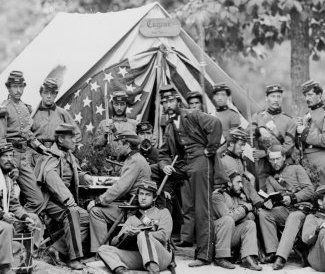
Like most Confederate and Union soldiers, Callaway grew weary of war and prayed for a hasty end to the battles. He dreamed of returning home to his wife and family. In James McPherson’s book, For Causes and Comrades: Why Men Fought in the Civil War, the title alone reveals two of the most significant motivations for fighting in the Civil War: Cause and Comrades. Soldiers fought for the cause – whether Union or Confederate. They fought for their side’s definition of cause and the belief system comprising that cause. Their motivation extended beyond the bright-eyed awestruck ideals of young Joshua K. Callaway at the beginning of his service. They also felt motivation for their comrades as the war established bonds and brotherhood that proved imperative to the soldiers’ motivations. Civil War soldiers journeyed through the hell of combat together. They lulled in the dreary moments of idle time and endured long stretches without their families and friends back home. As McPherson mentions, “The experience of combat did more than strengthen existing bonds; it also dissolved the petty rivalries and factions that existed in some regiments and forged new bonds among men who saw the elephant together.”[2]

Motivations often included honor, duty, commitment to family, patriotism, and hatred of the enemy for Civil War soldiers. Honor and duty weave together throughout almost every sample provided in McPherson’s book. One feels that powerful sense of honor and duty when reading the letters and memoirs of the soldiers. One of the most interesting factors was also their sense of duty to family. Many Civil War soldiers spoke of wanting a better world for their children, and that is what all parents hope for their children: peace and unity in their country. One soldier stated, “Our fathers made this country, we their children are to save it.”[3] Let us consider the powerful sentiment in that soldier’s statement, especially when we realize that less than 100 exists between the end of the American Revolution and the start of the Civil War. The Union fought to preserve the United States, and many expressed their love of their country and a deep sense of patriotism. The Confederates feared not only the Union trying to squash their freedoms, but many of the Confederate troops hated the Union for attempting to end slavery. The Confederates feared ending slavery would result in slaves uprising and revolting against them to seek revenge. It is as if the Confederates fought multiple enemies: Union soldiers, slaves, ideologies, and governments.

Another example of the variety of motivations felt by Civil War soldiers can be seen in black soldiers. Black soldiers possessed a much more personal motivation to fight in the war. They were not just fighting to end slavery; they were ultimately fighting for their lives. Whether their friends fought to abolish slavery, or their foes fought to maintain slavery, the lives of black soldiers were on the line. In many battles, even upon surrender, black soldiers faced brutal massacres. Many Union soldiers harbored racist ideologies and felt disdain for having black soldiers fighting alongside them. Undeterred, the black soldiers proved their loyalty and fierce determination to fight. They trained well and fought hard. They were not satisfied with sitting idly. Perhaps the racism lurking among white Union soldiers instilled increasing motivation among the black soldiers, inspiring them all the more to fight so valiantly in battle.

Overall, it is important to understand that motivations differed between sides and among individuals. Motivations varied according to situations and conditions. The motivations in the beginning often waivered and even drastically changed by the end – be it the end of the war or the end of one soldier’s time in the war. But most of all, even as the war took its toll, they fought for cause, and they fought for comrades.


Notes
[1] Joshua K. Callaway and Judith Lee Hallock, The Civil War Letters of Joshua K. Callaway. (Athens: University of Georgia Press, 2014), 161.
[2] James McPherson, For Cause and Comrades: Why Men Fought in the Civil War. (New York: OUP, 1997), 87.
[3] Ibid, 19.
Bibliography
Callaway, Joshua K., and Judith Lee Hallock. The Civil War Letters of Joshua K. Callaway. Athens, GA: University of Georgia Press, 2014. muse.jhu.edu/book/35187.
Glatthaar, Joseph T. “Touched with Fire: Uncommon Soldiers of the Civil War.” OAH Magazine of History 26, no. 2 (2012): 19-24.
McPherson, James. For Cause and Comrades: Why Men Fought in the Civil War. Ney York, NY: OUP, 1997.
 That History Lady