Abigail Adams holds a fascinating history as both the second first lady to President John Adams and mother to United States President John Quincy Adams. She served as her husband’s closest and most trusted advisor. To some, that role created anger and resentment, and many called her “Mrs. President.” Others, like Thomas Jefferson, greatly admired and respected Abigail Adams and her role. Sassy and unafraid to speak her mind, Abigail Adams was a stellar advocate for women’s rights, when in 1776, in a letter to her husband, she reminded him to “Remember the ladies” in establishing laws. Abigail Adams, outspoken and driven towards women’s rights, especially concerning women’s education, also abhorred slavery. Though Abigail Adams lacked formal education, she was well-read, intelligent, and financially savvy. In studying the American Revolution, hailing the founding fathers is essential, but it is also crucial to take a closer look at the leading ladies – especially one as intriguing as Abigail Adams. With her powerful voice, a solid understanding of the issues present in her day, and the respect and admiration of her husband, Abigail Adams epitomizes grace and strength and stands a leading lady in her own right.
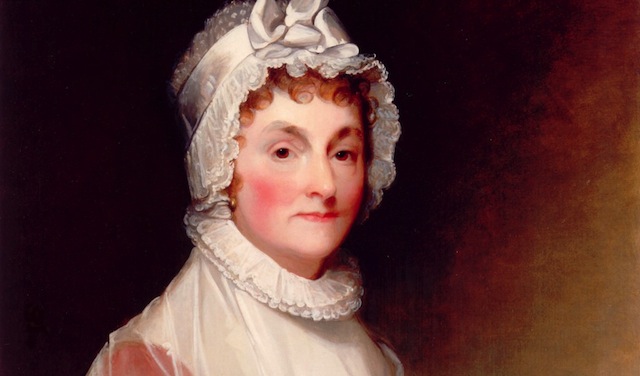
Most histories and biographies about Abigail Adams focus on the hundreds of famous letters she and her husband, John, exchanged over the years, especially during their long absences while he worked towards American independence. (Estimates stand at nearly 1,100 letters.) Born in 1744 in Weymouth, Massachusetts, Abigail Smith lacked formal schooling, but she loved reading and learning. Abigail Smith and John Adams, a budding lawyer, married in 1764. Shortly after their marriage, the earliest events that culminated into the American Revolution began unfolding around them. The couple endured longer and more frequent separations. While John was traveling, Abigail ran the family farm with little assistance and independently took care of four children. Through shortages from war, lack of help, constant fear of smallpox plagues and widespread cases of dysentery, and harsh New England winters, Abigail Adams prevailed and clung to detailed letter writing with her husband, family members, and friends such as Mercy Otis Warren.
Abigail Adams felt a deep concern for the women of the fledgling nation, seeking the same independence and equality for women as the men were fighting to establish for themselves. She proved capable of running her life and rearing her children with or without her husband. Her husband certainly entrusted her enough to write about happenings with the Continental Congress. John Adams believed his wife capable of understanding the nature of the situation at hand and even sent her a copy of Thomas Paine’s Common Sense to read. In March 1776, Abigail spoke up in a letter to her husband and stated:
“I long to hear that you have declared an indpendendancy – and by the way in the New Code of Laws which I suppose it will be necessary for you to make I desire that you would Remember the Ladies, and be more generous and favourable to them than your ancestors. Do not put such unlimited power into the hands of the Husbands. Remember all Men would be tyrants if they could.”[1]
Abigail Adams was undoubtedly ahead of her time to speak as she did. She never lost her passion for women’s rights during a time when most men laughed at such a notion. She sought to rid women of the image of being subservient to their husbands, to men. Women took on more masculine roles with their husbands off fighting for independence and they unflinchingly took on these new roles while maintaining their traditional mothering and female roles. Yet, women failed to warrant independent status in the early Revolutionary laws.
The constant humanitarian, Abigail Adams vented her frustration at the desperate situation of education for poor children. Abigail wrote, “The poorer sort of children are wholly neglected, and left to range the streets with out schools without Business, given up to all Evil.”[2] She reminded her husband about the inequality related to formal schooling for females. “If you complain of neglect of Education in sons, what shall I say with regard to daughters, who every day experience the want of it.” Abigail strongly believed in education for all children – rich and poor, male and female.
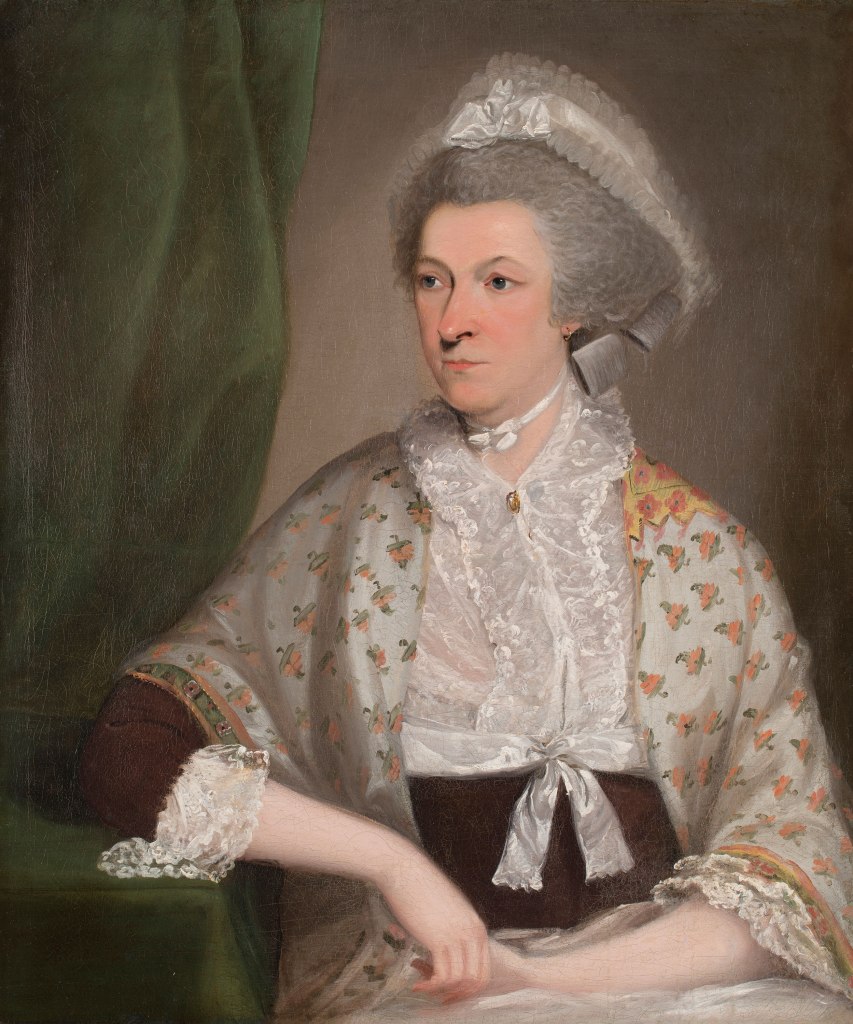
Abigail Adams despised slavery and spoke openly to her husband, especially on the irony of fighting for independence for “all” but not including slaves. She passionately voiced the need to end slavery just a few weeks into the first Continental Congress – months before the Revolutionary fighting sparked and well before African American soldiers were granted permission to fight in the war. “I wish most Sincerely there was not a Slave in the province. It always appeared a most iniquitous Scheme to me, fight ourselves for what we are daily robbing and plundering from those who have as good a right to freedom as we have.”[3]
In a 2010 article, Woody Holton stated, “Our nation’s most outspoken founding mother fired the final salvo of her revolutionary quest for women’s rights when she scratched out her will.”[4] Abigail Adams succumbed to typhoid fever on October 28, 1818, just shy of age 74. Over the years, she amassed a secret stash and wisely invested it – proof of her entrepreneurial and financial savviness. When she died, her husband was still alive and well; however, she bequeathed the money to women in her family and close circle – most of them married women. Married women had no rights to nor control over property. Historians often write about Abigail’s feistiness regarding women’s rights; Woody Holton clarifies, “But what they have overlooked is that she did not simply complain about the government’s denial of married women’s rights. She defied it.”[5] While Abigail Adams’s will could not stand as a legal document, her husband honored her requests. By respecting Abigail’s final wishes, John Adams respectfully remembered his lady.
John Adams understood Abigail Adams’s impact in his life and respected her enough to entrust her as his most trusted advisor. And while it is easy for some critics to say, “Well, she was married to a president, and because of her husband, she could garner attention for her activism.” However, having a famous and influential husband does not stop her from having her own opinions and actively voicing (or writing) her thoughts. Remember, John Adams did not always agree with his wife, but he did not silence her. And, in the end, he even carried out the final wishes of his dearest friend, distributing monies from her hidden stash to female family members and friends. Abigail Adams, the wife of John Adams, served as the second First Lady, but most of all, throughout her life, Abigail Adams was a most extraordinary leading lady.
Citations:
[1] John Adams and Abigail Adams. My Dearest Friend: Letters of Abigail and John Adams. Edited by Margaret A. Hogan and C. James Taylor. (Cambridge, MA: Belknap Press of Harvard University Press, 2010) 110.
[2] John Adams and Abigail Adams. My Dearest Friend: Letters of Abigail and John Adams. Edited by Margaret A. Hogan and C. James Taylor. (Cambridge, MA: Belknap Press of Harvard University Press, 2010) 140.
[3] John Adams and Abigail Adams. My Dearest Friend: Letters of Abigail and John Adams. Edited by Margaret A. Hogan and C. James Taylor. (Cambridge, MA: Belknap Press of Harvard University Press, 2010) 47-48.
[4] Woody Holton. 2010. “Abigail Adams’ Last Act of Defiance.” American History 45 (1): 56.
[5] Ibid, 57.
 That History Lady
Please note: all misspellings come from Abigail’s letters. The quotes are her actual words and spellings.
LikeLike
This article shows what an amazing team a husband and wife can be and what can be accomplished. It shows how laws and lifestyles can evolve as people with open minds and forward thinking ideas can slowly make improvements that in retrospect, seem like common sense now.
LikeLike